IONATE Knowledge Transfer Partnership: AI-Powered Control for Hybrid Intelligent Transformers
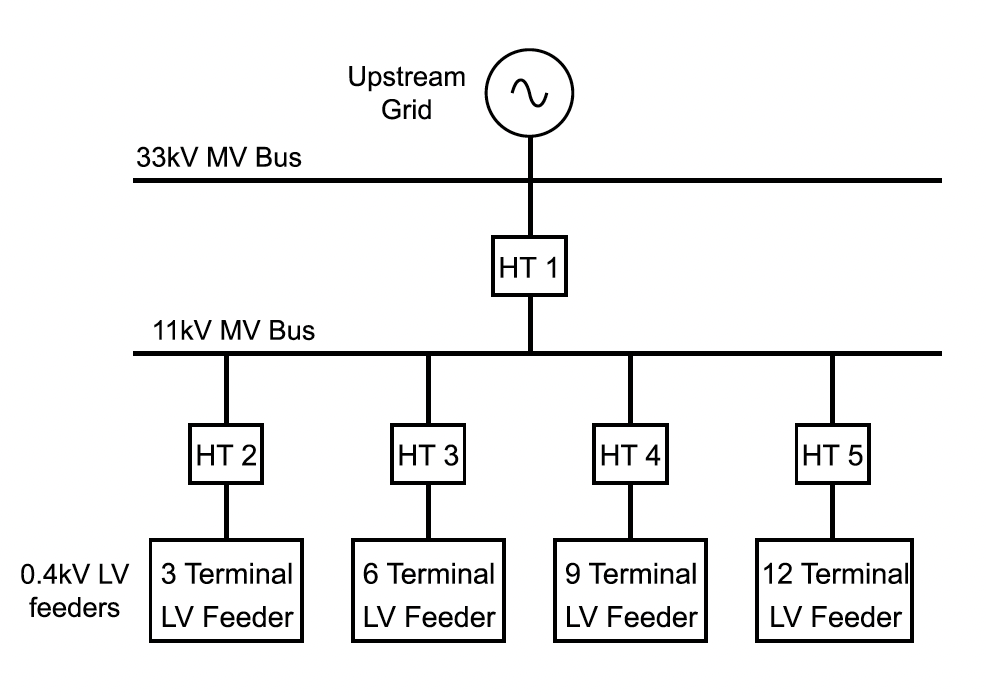
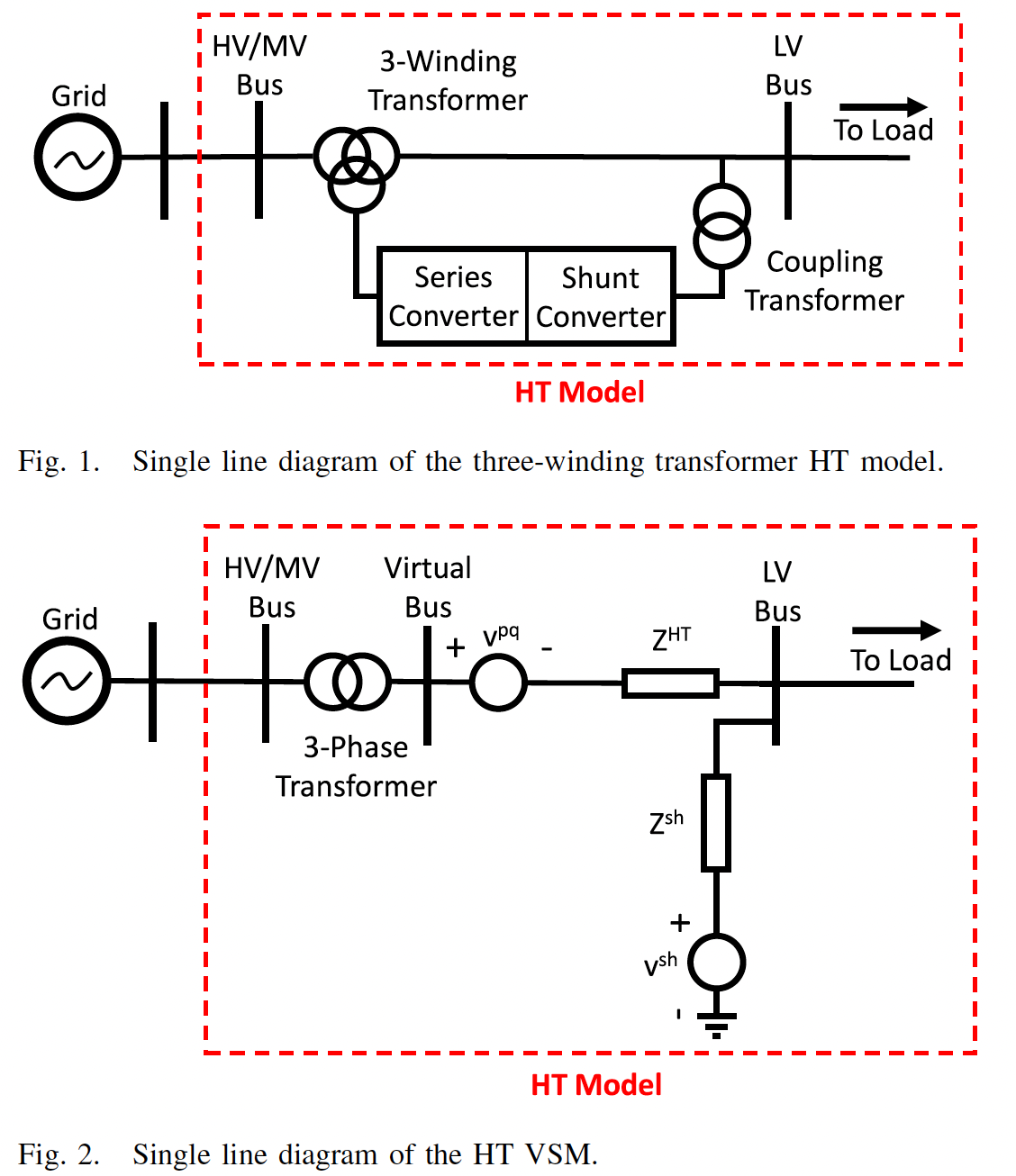
This research project aims to revolutionise power distribution systems through the development of an AI-powered software platform for novel Hybrid Intelligent Transformers (HITs). These advanced devices replace traditional transformers, delivering key functionalities such as dynamic voltage regulation, harmonic suppression, and reactive power control, all with millisecond-level responsiveness. The project, in collaboration with IONATE Ltd, aims at facilitating the penetration of renewable energy into the grid. By enabling both local optimisation and coordination at system level, HITs offer a transformative opportunity to enhance the efficiency, capacity, and reliability of modern electricity networks.
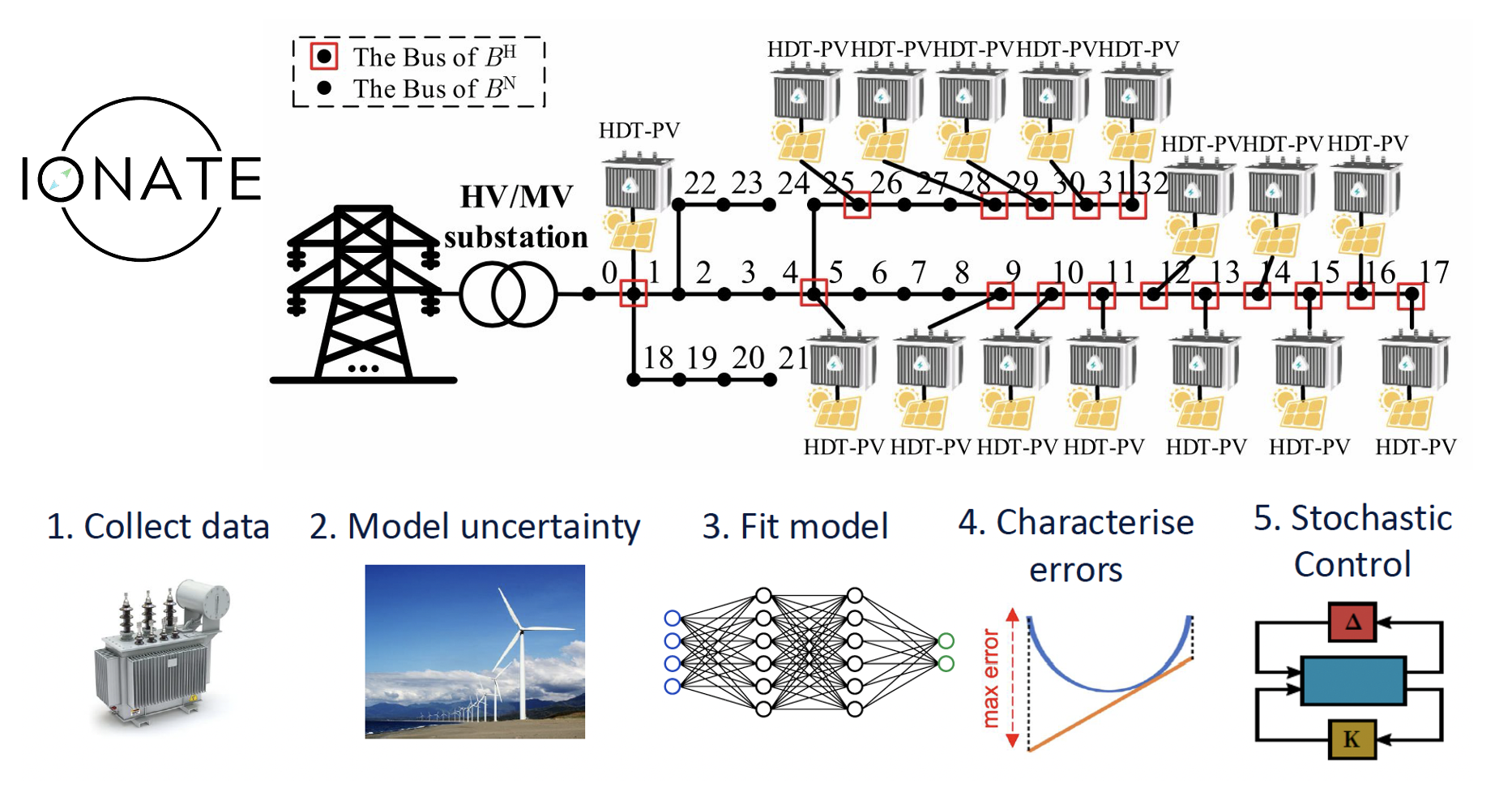
To achieve these objectives, the project leverages cutting-edge methodologies, including stochastic model predictive control (MPC) and deep learning, to design decentralised optimisation and control strategies. These approaches enable real-time, scalable coordination of HITs, enhancing their capability to manage power flows effectively. The integration of machine learning for forecasting, uncertainty quantification, and robust dynamic control design ensures the system can adapt to varying conditions and uncertainties within the network.
The project combines power systems modelling, distributed optimisation, and advanced control theory. It aims to address the growing challenges of integrating renewable energy resources, reducing network losses, and deferring costly infrastructure upgrades. By enhancing HIT performance at both individual and network-wide levels, the platform will support the decarbonisation of power systems, aligning with net-zero targets and advancing global energy transition efforts.
Team
Key outputs
- A strategy for optimal coordiantion of HITs in distribution networks (Hayward et al., 2024)
- A strategy for optimal placement of HITs in distribution networks (Hayward et al., 2025)
- A real-time HIT control strategy for the simulatneous delivery of multiple grid services, including voltage regulation, phase-balancing and frequency response (Doff-Sotta et al., 2026)
References
2026
- arXiv
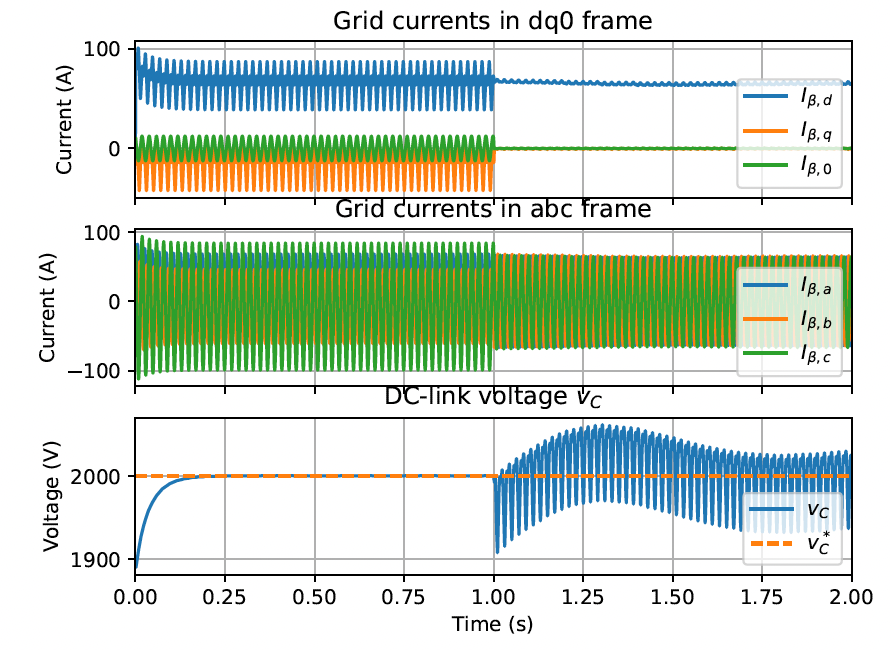 Modeling and Control of Hybrid Distribution Transformers for Simultaneous Grid ServicesarXiv preprint arXiv:2602.00798, 2026